
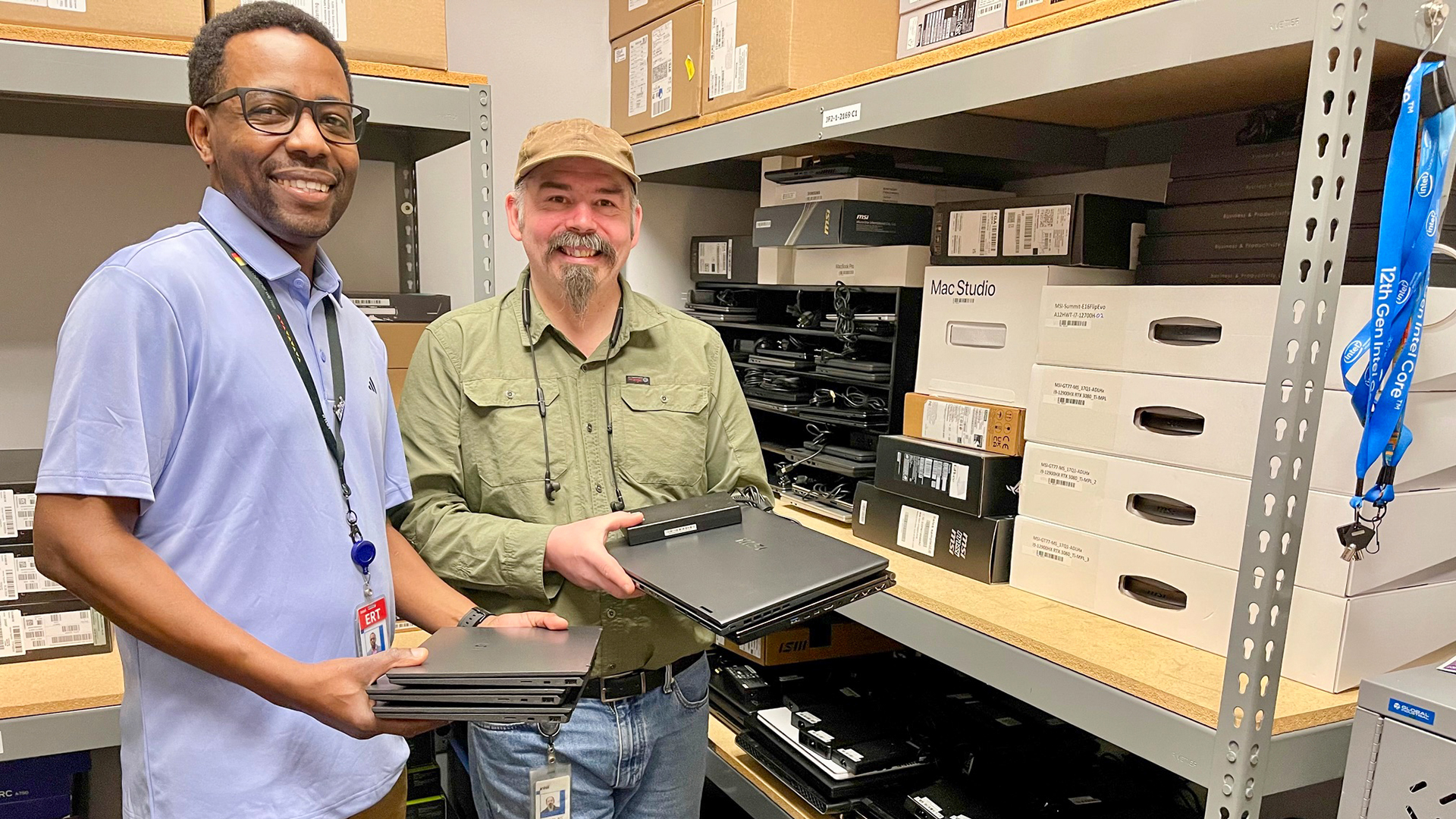


For years, the second lives of retired PCs were limited: They went to teams or execs so they could experience the latest features, were broken down for parts, or were donated to nonprofit tech refurbishment organizations such as Portland, Oregon’s Free Geek, with others recycled as electronic waste.
Today, some of these PCs – most just a few years old – avoid those fates. In 2024, 20 retired demo PCs arrived in Africa as part of a donation to give the laptops a second life and young African entrepreneurs a leg up.
And more will be on the way. Blair says, “We have shelves along the walls three laptops deep, and there’s probably six piles on each shelf.”
Tony Abuta, who has roots and family in Kenya, lives in Oregon and works in Intel’s Edge Computing Group’s Cities and Critical Infrastructure Division. He says the word “amsha,” a Swahili term that means “wake up,” perfectly describes the nonprofit he helped co-found in 2008, the Amsha Africa Foundation, or AAF.
“There's so much talent, there are so many opportunities in Africa,” Abuta says. “And just because of the history of what's going on there, that talent needs to be woken up so they can take advantage of the opportunities they have.”
AAF works with community groups, other nonprofits and government agencies in some of Africa’s poorest areas. The group provides water sanitation and hygiene programs, self-help workshops, health checkups, child abuse and neglect prevention, and education, as well as professional development.
Every year, half of all graduates in Africa struggle to land a job. AAF’s Africa Gigsters program helps them find online job opportunities from business owners outsourcing freelance gigs like graphic design, drafting, writing or web development. A computer is essential to most professional work, but the cost of even the most basic PC can be out of reach for many in Africa.
Abuta saw the need and connected with Blair. Together, they made a plan to ship those 20 demo laptops to AAF’s Gigsters program. When the PCs arrived in Kenya in February 2024, they immediately started making a difference.

