
ADR is using Intel® Xeon™ processors, Intel® Core™ Ultra and Intel® OpenVINO™ tech on its Explora System to analyze 3D LiDAR data, thermal and visible light images, gas levels and other critical data points in real-time.
Copper, silver, gold and rare earth elements are among dozens of critical minerals we need to power our modern world.
But extracting these minerals from the earth is a very risky – and expensive – business.
Underground mines – some run as deep as 2 miles (3,000 meters) under the earth – are among the most hostile, unforgiving environments on the planet.
Deep inside these mines, hazards like extreme heat, lack of visible light, sudden rockfalls, invisible seams of toxic gas and a complete absence of GPS signals present tough challenges to both mining crew as well as their mining equipment.
Underground mining operations also require lengthy, mandatory geotechnical and safety inspections, which can require mining machinery to shut down for over 110 hours per month, resulting in operational costs of over $50,000 per week.
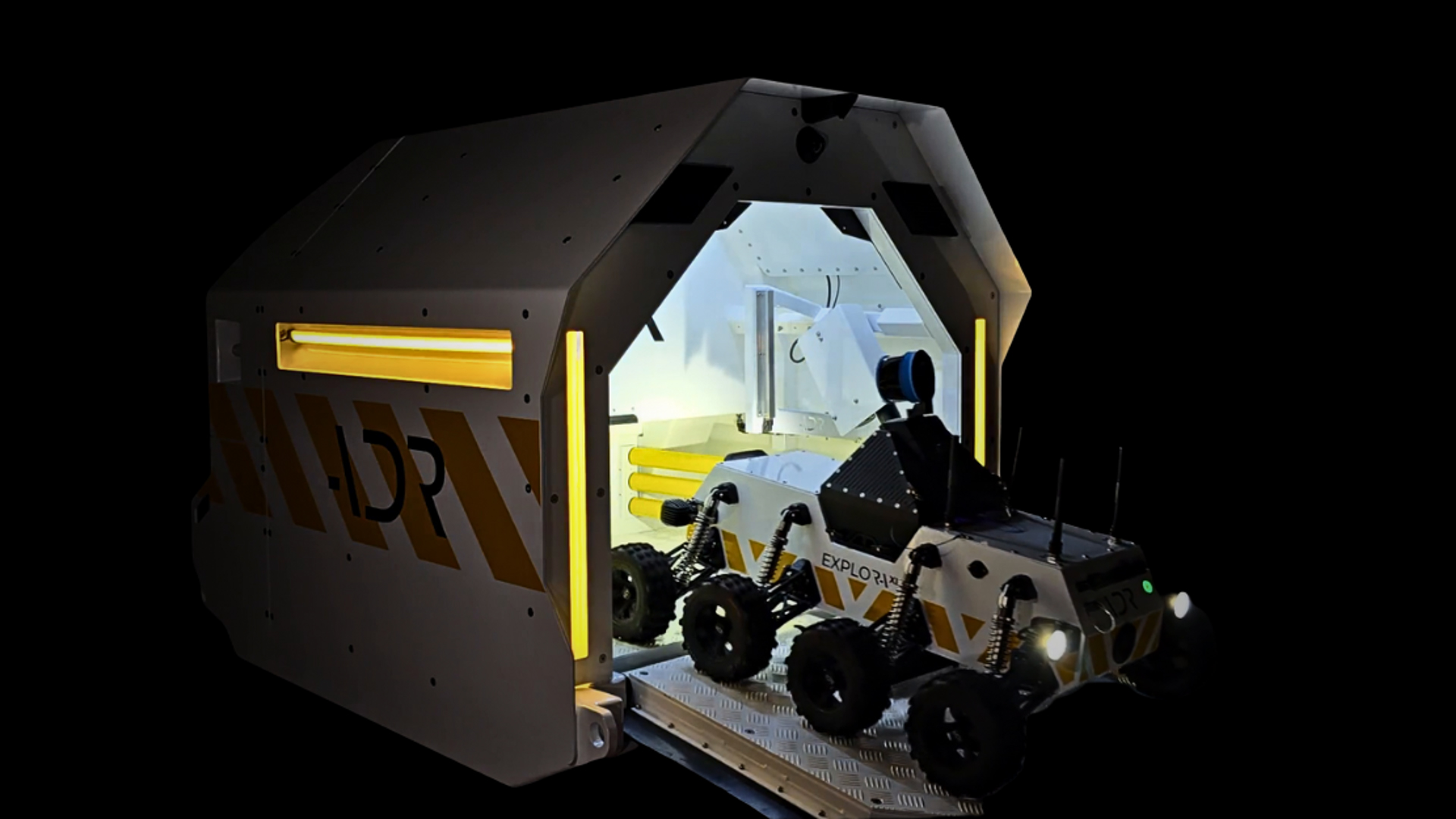


ADR’s Intel-powered robots bring real-time insight to hazardous underground mines Intel is here to help.
Today, ADR, an Australian robotics expert and Intel are making these mines safer to operate and more efficient to run by utilizing Intel-based hardware and software on its specialized, autonomous, remote-controlled platforms.
ADR is using Intel® Xeon™ processors, Intel® Core™ Ultra and Intel® OpenVINO™ tech on its Explora System to analyze 3D LiDAR data, thermal and visible light images, gas levels and other critical data points in real-time.
As these ultra-rugged rovers – each weighing about 26 kg (57 lbs) and rated to run for up to 12 hours – map a clear path through underground mines, the massive data cache produced by its onboard sensors is relayed wirelessly to a human controller a safe distance away, eliminating the need for any tradeoff between human safety and high-risk data gathering deep in these hazardous mines.
When the rover has done its job, it returns to the ADR Docking Station – a 460 kg (1,016 lbs) permanent underground enclosure connected to the mine’s power and network infrastructure.
There, an automated pneumatic air-blast wash system cleans all the rover’s sensor glass and dirt-caked wheels.
The Docking Station also recharges the rover via wireless inductive charging, eliminating corroding mechanical contact pins in wet, highly acidic mine environments.
The next version of ADR’s Explora system – featuring Intel® Core™ Ultra Series 3 CPUs – will roll out over the next 12 months for all its existing customers as part of its standard system upgrade process.

More intelligence, less hardware: Intel helps ADR expand its mining robots’ AI capabilities
Mat Allan, co-founder and CTOADR explained how Intel-based technologies used on its Explora platform delivers decisive advantages especially at the edge, where robotics systems face extreme size, weight and power constraints.
ADR evaluated numerous embedded systems and discrete mobile accelerators in the market before eventually selecting Intel Core Ultra, Intel Core Xeon and Intel OpenVINO platforms, said Allan.
“By leveraging the latest Intel-based hardware, we were able to deliver exceptional compute density per watt across the CPU, the integrated Arc GPU, and the NPU while keeping to strict thermal limits,” Allan explained, adding that internal benchmarking from ADR point to 2X encoder resolution, 1.5X faster overall system speedup and 40% improvement in edge AI headroom.
OneAPI and OpenVINO helps optimize demanding workloads at scale
Intel’s open software ecosystem also delivered numerous advantages to ADR and its mining customers across the globe.
“On the software side, Intel's oneAPI and OpenVINO ecosystems allow ADR to optimize and deploy complex deep-learning vision models and massive spatial point-cloud routines without being locked into proprietary, closed hardware ecosystems,” said Allan.
ADR also discovered that the cycle cost of point-cloud compression was lowered so significantly that over 50% of onboard CPU capacity was freed up to run OpenVINO AI models (like real-time rock fragmentation analysis, brow wear measurement, and blast misfire detection) without requiring secondary computing hardware.
“The next-generation Explora systems powered by Intel Core Ultra represent the natural evolution of this field-proven platform. Thanks to Intel, we now have the ability to scale compute capacity and thus, have greater redundancy for reliability,” Allan added.
Performance varies by use, configuration and other factors. Learn more at intel.com/performanceindex. Performance results are based on testing as of dates shown in configurations and may not reflect all publicly available updates. See backup for configuration details. No product or component can be absolutely secure.
Your costs and results may vary. Intel technologies may require enabled hardware, software or service activation.
Intel does not control or audit third-party data. You should consult other sources to evaluate accuracy.